Why Wine Vineyards in South Africa Deserve a Place on Every Serious Wine Lover’s Map
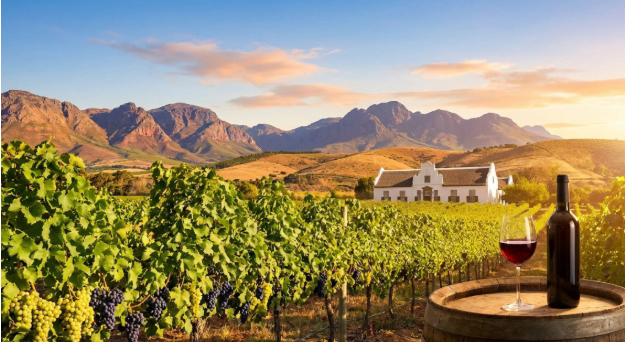
Most people who visit wine regions go expecting to drink well. What catches them off guard in South Africa is how much they end up thinking. The Cape Winelands carry a particular weight—geological, historical, and political—that surfaces in conversations with winemakers in ways that visiting Bordeaux or Napa simply does not produce. The landscape is extraordinary, and the wines are often exceptional, but it is the context surrounding them that stays with people longest. Wine vineyards in South Africa are not just agricultural sites. They are places where a country’s unresolved questions show up in surprisingly direct ways and where the wine itself becomes a lens for understanding something considerably larger.
The Land Question Is Always Present
Nowhere in the global wine industry does land ownership carry the moral complexity it does here. Many of the estates that produce celebrated wines sit on land with a dispossession history that is neither distant nor abstract. Some producers are navigating this actively — through worker equity schemes, community partnerships, and genuine profit-sharing models that have no real equivalent in European wine culture. Others are not. Visitors who ask about this directly, rather than politely steering towards tasting notes, tend to learn more about a producer’s actual values in ten minutes than any marketing brochure would reveal in a lifetime.
Stellenbosch and Swartland Think Differently
This distinction matters more than most wine guides communicate. Stellenbosch built its reputation through conventional ambition — international varieties, investment cellars, and wines calibrated to impress critics working within established frameworks. It works, and the best estates produce genuinely serious wine. Swartland developed through active rejection of that entire model. Producers there arrived, in many cases, specifically because they found Stellenbosch’s aspirations uninteresting. What emerged was a movement oriented around old bush vines, indigenous varieties, and a philosophy of minimal intervention that has influenced winemakers globally. Wine vineyards in South Africa that sit within that Swartland tradition are making wine in conversation with ideas, not just markets.
What Old Vines Actually Mean
South Africa has bush vines of an age that most wine-producing countries quietly envy. The significance of this is not sentimental. Old vines produce lower yields, develop dramatically deeper root systems, and draw from soil layers that younger plantings cannot access. The resulting wines carry a concentration and complexity that cannot be manufactured through technique. What is particularly striking in South Africa is how nearly this resource was lost. During periods when quantity was prioritised over quality, vast areas of old vine material were pulled out. What remains is genuinely irreplaceable, and the producers who understood that early enough to preserve it are sitting on something the wine world is only beginning to properly value.
Chenin Blanc’s Untold Range
France considers Chenin Blanc its own, but South Africa grows more of it than anywhere else, and the stylistic range produced here exposes just how narrow the Loire Valley’s interpretation actually is. Coastal sites with cold Atlantic influence produce wines of high, almost austere acidity. Old dryland bush vines in warmer inland areas produce something altogether richer and more textured. South African wine vineyards working seriously with Chenin are making the argument, increasingly convincingly, that the grape’s spiritual home may not be Vouvray after all. That is not a provocative claim for its own sake — it is what the wines themselves suggest when tasted without prejudice.
The Conversations Worth Having
Access to winemakers in South Africa remains genuinely unusual by global standards. Getting an hour with the person who actually made the wine — not a trained pourer delivering rehearsed tasting notes — is achievable here in ways that comparable European regions rarely permit. Those conversations reveal things that no critic’s score communicates. Why is a particular block always picked last. What a difficult vintage it forced them to abandon and what it accidentally taught them. Which wine in the range do they find most personally interesting, and why. These exchanges change how a person understands wine permanently.
Conclusion
South Africa’s wine regions reward visitors who arrive with genuine curiosity and leave the checklist behind. Wine vineyards in South Africa carry stories that go well beyond viticulture – about land, identity, extraordinary old vines, and winemakers working within a context that gives their decisions real stakes. The wines are frequently world-class. But the experience of understanding where they come from and what surrounds their production is what makes visiting here genuinely irreplaceable.