Mandibular Splint for Sleep Apnoea and Restful Nights Restored
Sleep apnoea does not usually arrive in a way that feels obvious. There is no single point in the night where everything clearly stops. It works more like a quiet disruption that keeps returning. Airflow reduces for a moment, then returns, then reduces again. The body keeps responding in the background, even when sleep feels uninterrupted. By morning, the result is there, even if the night itself is hard to remember. This is why a mandibular splint for sleep apnoea is often discussed as a structural approach rather than a behavioural one.
Jaw Position Factor
The position of your jaw plays a role in how well your airway works. When you are in sleep your lower jaw can move back a little bit. This can make the space behind your tongue smaller. Even a small change in the position of your jaw can affect how well you breathe.
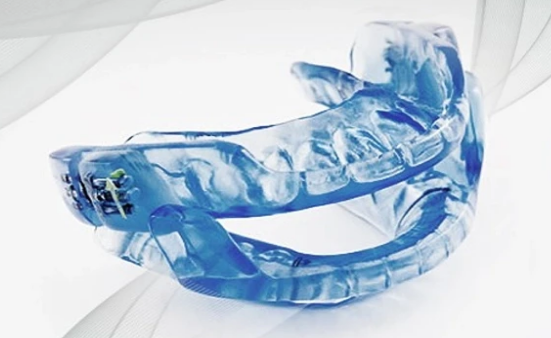
The mandibular splint for sleep apnoea works by moving your lower jaw forward into a better position. It does not force your jaw into a position that’s not natural. It just helps your jaw stay in a place where your airway can stay open.
This small change in the position of your jaw can make a difference in how well you breathe when you are sleeping. Your tongue is less likely to fall and block your airway. The air can move in more smoothly. You do not have to try to breathe or even think about it.
Sleep Fragmentation
Sleep is made up of cycles that should flow smoothly. When breathing is stable, those cycles continue without interruption. When airflow changes repeatedly, the cycles restart more often than they should.
Each time the airway narrows, the body reacts. Those reactions are small, and most are not remembered. Still, they break continuity. Over time, sleep becomes fragmented rather than steady. The issue is not how long sleep lasts. It is how often it is interrupted. Even if someone remains asleep the entire night, the quality of rest can still be reduced.
With mandibular splint for sleep apnoea, the aim is to reduce those interruptions by keeping the airway more consistently open. Fewer changes in airflow mean fewer reactions from the body. That allows sleep stages to continue with less disruption.
Adjustment Phase
Any change to sleep position takes time to settle. The jaw is used to return to a familiar resting point every night. When that position changes, the body notices it at first. There may be a period where the device feels unfamiliar. Not uncomfortable in a strong sense, but present in a way that draws attention. The tongue and jaw begin adjusting during sleep without conscious control.
Over time, that awareness reduces. The jaw begins to accept the guided position more naturally. Muscles stop resisting the change. Sleep becomes less interrupted by the feeling of something new in place. This adjustment does not happen quickly. It builds gradually as the body adapts to a different resting alignment.
Clinical Viewpoint
Oral devices are not used in a general way for all cases of sleep apnoea. They are selected based on how airway collapse occurs and how the jaw contributes to it. Some cases involve mainly jaw-related narrowing. Others involve more complex airway behaviour. That difference determines whether a splint is suitable.
A mandibular splint is used when jaw position clearly affects the airway space during sleep. It focuses on reducing mechanical narrowing rather than changing breathing patterns directly. Ongoing monitoring is important. Jaw comfort, airway response, and overall sleep quality need to stay in balance. The goal is steady improvement without creating new strain.
Sleep Continuity
Sleep quality depends on how continuous it feels. When breathing is unstable, the body remains in a light state of alertness. That prevents deeper stages of sleep from continuing without interruption. Even if sleep is not fully broken, it becomes less restorative. The rhythm is constantly adjusted in response to airflow changes.
When airway resistance reduces, sleep becomes more stable. Interruptions occur less often. The body spends more time in deeper rest without constant resets. With mandibular splint for sleep apnoea, this change is often noticed as smoother sleep rather than different sleep. The structure remains the same, but the interruptions are reduced.
Conclusion
Sleep apnoea can disrupt your sleep by blocking your airway over and over again. This can happen without you noticing,, but it can still affect how well you sleep. A mandibular splint for sleep apnoea works by moving your lower jaw forward to help keep your airway open. This reduces the chances of your tongue falling back and blocking your airway. It helps you breathe smoothly. Over time, your breathing becomes steadier. Your sleep cycles feel smoother. The result is a restful sleep that helps you recover better without changing the way you sleep.